
Did you know that bruxism, or chronic teeth grinding, can potentially cause dental or bite misalignments? The added pressure placed on your enamel and jaw joints from constantly biting down can eventually start to push things out of their ideal positions.
Invisalign continues to gain popularity as an effective way to straighten smiles more comfortably and discreetly than traditional braces, but you’re not alone if you’re wondering whether your teeth grinding might prevent you from completing this treatment successfully. Continue reading to learn more about it to help determine if this service is right for you!
What is Bruxism?
Have you ever woken in the morning with a sore jaw, or do you notice yourself clenching your upper and lower arches together throughout the day? If so, you might have bruxism, also known as teeth grinding. This is often a subconscious habit that happens overnight while you’re sleeping, though it can also affect you while you’re awake.
This condition can contribute to other issues, like temporomandibular joint disorders (TMD) that cause a stiff, aching, or locked jaw. It also increases the risk of developing chips and cracks that can lead to more severe injuries or infection.
How Does Invisalign Work?
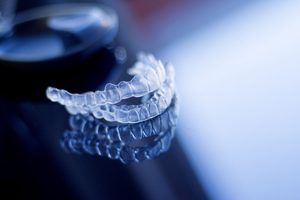
Instead of using metal brackets and wires like braces, this option utilizes a series of transparent plastic trays that are customized to fit snugly over your teeth to shift them to their rightful positions.
These aligners are removable, so there are no dietary restrictions and it’s easier to maintain an at-home oral hygiene routine, but they must be worn for 20 to 22 hours daily to prevent your teeth from reverting to their starting places. Then, after a week or two, you’ll be directed to switch to the next pair of trays in your treatment to account for your smile’s movement.
Can I Get Invisalign If I Grind My Teeth?
Some patients wonder whether having bruxism disqualifies them from undergoing treatment with Invisalign, but thankfully, you can set your fears aside. While your teeth grinding might damage the trays, each set is only meant to be worn for a short time. You are unlikely to cause enough harm to the plastic material to render it ineffective before it’s time to switch to the next set. Not only that, but clear aligners can also cushion your teeth to prevent dental damage from grinding.
That means you might still be considered a good candidate for Invisalign, and your orthodontics might even help shield your teeth throughout treatment! Your dentist can provide more accurate information based on your unique circumstances during your consultation appointment.
Meet the Author
Dr. Tathagat Chawala is passionate about helping improve patients’ lives by enhancing their dental health. He earned his dental degree from New York University and today has over a decade of experience providing a complete menu of services, including Invisalign, to meet the unique needs of people of all ages. His caring approach is combined with advanced technology to deliver beautiful, accurate results meant to last. You can request an appointment on the website or call the office at (972) 516-1818.
